Can You Win Real Money at Sweepstakes Casinos? What the Data Shows
 Available in US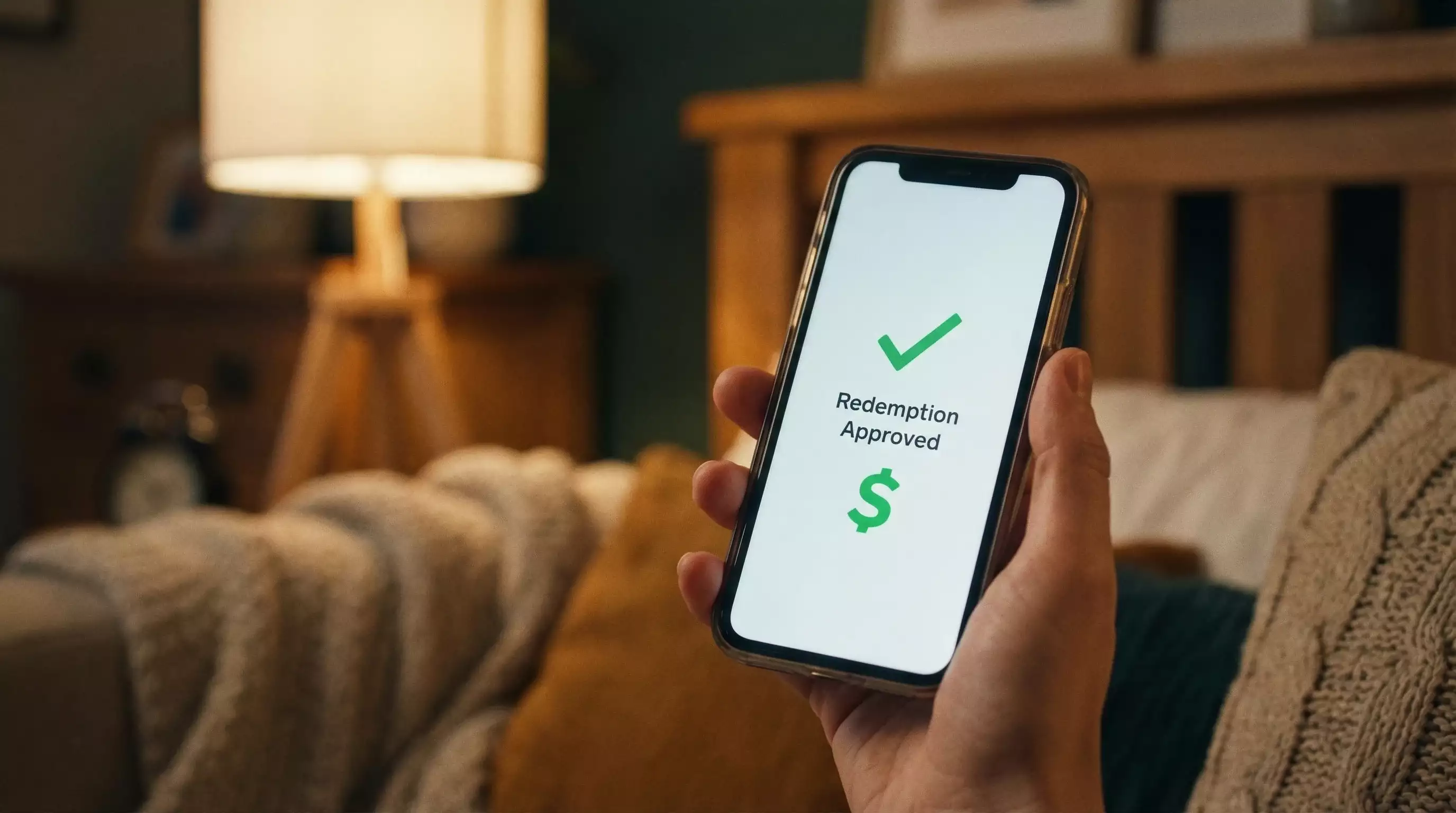
The short answer is yes — you can win real money at sweepstakes casinos. Players redeem Sweeps Coins for cash prizes every day, and the process is neither theoretical nor obscure. The more useful answer, though, requires context. According to an AGA-commissioned survey, 68% of sweepstakes casino players say they play primarily to win money. That is a clear majority who approach these platforms with financial expectations, and for their sake, those expectations deserve to be measured against what the data actually shows.
Sweepstakes casinos are not traditional gambling platforms, and the mechanism through which you “win” money is structurally different from a regulated online casino. Understanding that mechanism — and what it means for your realistic chances of walking away with a profit — is the starting point for any honest assessment of whether sweepstakes casinos deliver on their marketing promises. Yes, but here is the math.
How the Prize Model Works
At a regulated online casino, you deposit money, gamble with it, and withdraw winnings. The transaction is direct: your dollars go in, your dollars come out. At a sweepstakes casino, the flow is different. You purchase Gold Coins — an entertainment product — and receive Sweeps Coins as a free promotional bonus. You play games with those SC, and if your balance grows above the platform’s minimum redemption threshold, you submit a request to convert your SC into cash prizes. The money you receive is classified as a sweepstakes prize, not a gambling payout.
This distinction is not just legal window dressing. It shapes the entire player experience. You cannot deposit $50 and wager it directly. Instead, you buy a $50 Gold Coin package, receive some number of bonus SC, and play with those SC. The amount of SC you receive per dollar spent varies by platform and package — a $50 purchase might yield 25 SC at one casino and 50 SC at another. Your “effective stake” depends on the SC-to-dollar conversion rate, which is set by the operator and varies across purchase tiers.
Free entry paths add another layer. Daily login bonuses, AMOE mail-in requests, referral programs, and social media giveaways all distribute SC at no cost. Players who use these methods receive Sweeps Coins without any purchase, which means their “investment” is time and effort rather than money. Any prizes they redeem from free SC are pure profit — minus the tax obligation, since the IRS treats all sweepstakes prizes as income regardless of how the SC was obtained.
Industry defenders maintain that this promotional model is fundamentally different from gambling. Jeff Duncan, Executive Director of the SGLA, has argued publicly that California should have supported innovation in this space rather than shutting it down. The sweepstakes industry positions itself as offering entertainment with a promotional prize component, not gambling with a creative payment structure. Whether you agree with that framing or not, it defines the legal and practical framework within which the prize model operates.
What “Winning” Looks Like: Averages and Expectations
If you define “winning” as redeeming more cash than you spent on Gold Coin purchases, most sweepstakes casino players do not win. This is not a controversial statement — it is a mathematical property of any system where the operator retains a percentage of each transaction. The house edge exists at sweepstakes casinos just as it does at regulated casinos, and over time, it ensures that the aggregate player base returns less than it spends.
Individual outcomes vary enormously. Some players hit large multiplier wins on high-volatility slots and redeem hundreds or thousands of dollars from a modest initial purchase. Others grind through daily logins and AMOE requests, accumulating small SC balances that they redeem periodically without ever making a purchase — those players are, by definition, profitable, since their cost basis is zero. And a large number of players purchase Gold Coin packages, play through the accompanying SC, and end up with a balance below the redemption threshold.
The most realistic way to think about sweepstakes casino winnings is as a distribution, not a single number. A small percentage of players will redeem significantly more than they spent. A larger percentage will redeem something, but less than their total purchases. And the largest group will either not redeem at all — because they did not reach the threshold, did not complete KYC, or simply stopped playing before cashing out. The operator profits from the aggregate of all these outcomes, even though individual players within the distribution can and do come out ahead.
Players who approach sweepstakes casinos purely through free methods — daily logins, AMOE, referrals — sit in a uniquely favorable position. Their financial risk is zero. Any SC they accumulate and redeem is pure upside. The trade-off is time: building a redeemable balance through free methods alone takes weeks or months of consistent engagement. For players who treat it as a passive side activity rather than a primary income source, the math works. For anyone expecting quick or substantial returns, the numbers suggest tempering that expectation.
The Payout Reality: 65-72% Return
The most concrete data point available on sweepstakes casino payouts comes from RG.org’s analysis of operator financials: the industry returns approximately 65–72% of total player spend as cash prizes through Sweeps Coin redemptions. That means for every $100 players collectively spend on Gold Coin packages, between $65 and $72 flows back as redeemed prizes. The remaining $28–$35 is the operator’s gross margin.
This payout rate is lower than what regulated online casinos typically deliver. Licensed iGaming platforms in states like New Jersey and Michigan report slot payout rates above 90%, and many individual games run at 95–98% RTP. The gap between a 70% aggregate payout and a 96% game-level RTP at sweepstakes casinos exists because the aggregate figure includes all players — those who never redeem, those who abandon SC balances, and those who lose during wagering requirement clearing. The game-level math is better than the industry-level outcome suggests.
For an individual player who selects high-RTP games, clears wagering requirements efficiently, and redeems every eligible SC, the personal payout rate can significantly exceed the industry average. The 65–72% figure is a floor set by aggregate behavior, not a ceiling on individual performance. Strategic players pull themselves above that average; casual players and those who do not redeem drag it down.
Realistic Expectations vs Marketing Hype
Sweepstakes casino marketing is built on showcasing winners. Social media feeds feature screenshots of five-figure redemptions. Welcome pages promise thousands of free SC. Promotional emails highlight the biggest payouts of the week. None of this is necessarily fabricated — large wins do happen — but the marketing presents the tail of the distribution as if it were the median. It is the equivalent of a lottery advertising its jackpot winners without mentioning the millions of non-winning tickets sold.
A realistic expectation for a purchasing player is that you will spend more on Gold Coin packages than you redeem in SC prizes. A realistic expectation for a free-play-only player is that you will accumulate SC slowly and redeem modest amounts over time. A realistic expectation for any player is that sweepstakes casinos are an entertainment product with a promotional prize component — not a reliable income stream, not an investment, and not a shortcut to financial gain.
That does not make them worthless. Entertainment has value. The possibility of winning real prizes from free or low-cost play has value. The key is calibrating your expectations to the math rather than the marketing. If you enjoy the games, appreciate the chance of a payout, and set spending limits that reflect your entertainment budget rather than your financial ambitions, sweepstakes casinos deliver what they promise. If you expect to come out ahead over the long term as a purchasing player, the numbers say otherwise.
Can You Win Real Money at Sweepstakes Casinos? What the Data Shows — More on this topic at free sweepstakes coins.
See also Sweepstakes Casino VIP Programs.