Sweepstakes Casino Tournaments: How Leaderboard Events Work and How to Win
 Available in US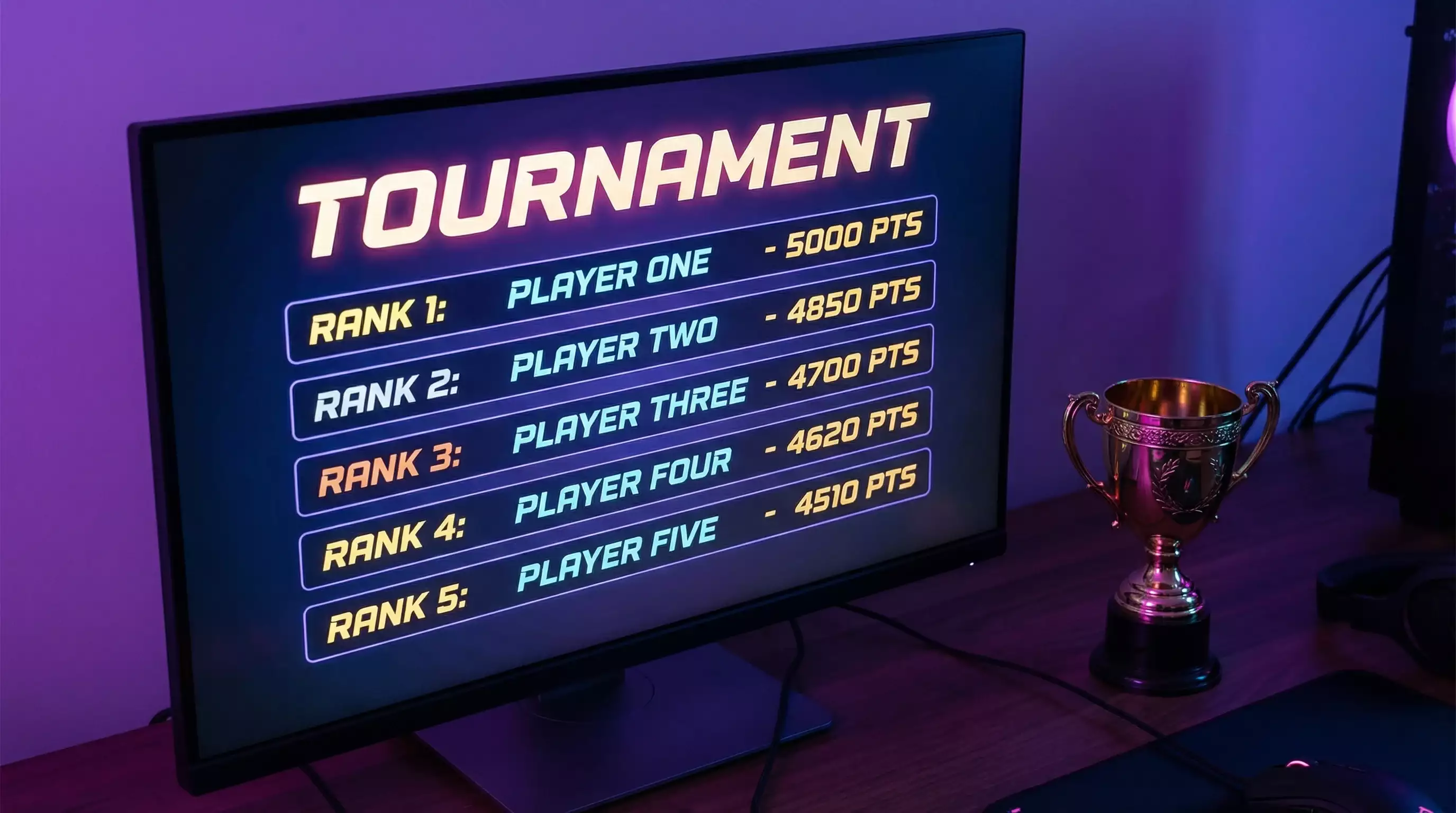
Sweepstakes casinos are mostly solitary experiences — you log in, spin slots, and your results are yours alone. Tournaments change that. They take the same games you already play and add a competitive layer: a leaderboard, a time limit, a prize pool, and a reason to care about how your results compare to everyone else. For the 68% of sweepstakes casino players who play primarily to win money, according to AGA survey data reported by GamblingNews, tournaments offer a structured path to prizes that goes beyond individual session luck.
Not every sweepstakes casino offers tournaments, and the ones that do vary significantly in format, prize structure, and entry requirements. Some are free to enter. Others require a buy-in. Some reward the highest total win amount. Others reward the highest multiplier on a single spin. Knowing which format suits your bankroll and play style — and which platforms run the best events — is the difference between climbing the board and wasting your entry. Climb the board, claim the prize.
Tournament Formats and Rules
Sweepstakes casino tournaments typically follow one of three scoring formats, and the format determines the optimal strategy for each event.
The most common format is total-win scoring, where participants compete to accumulate the highest total winnings from a designated set of games within a time window. The time window can range from a few hours to a full week. Your position on the leaderboard is determined by the sum of all your wins minus your wagers during the tournament period. This format favors consistent play and high volume — the more you spin within the window, the more opportunities you have to accumulate winning spins.
The second format is multiplier scoring, where the leaderboard ranks players by their highest single-win multiplier rather than total winnings. A player who hits a 500x win on a $0.10 bet outranks a player who accumulates $1,000 in steady wins. This format rewards volatility and bonus-round performance rather than grinding volume. High-volatility slots with explosive bonus mechanics are the optimal game choice in multiplier tournaments.
The third format is points-based scoring, where specific in-game actions — triggering a bonus round, hitting a certain symbol combination, completing a task — award tournament points. This format is the most varied and the hardest to generalize about, since the scoring criteria change from event to event. Read the tournament rules carefully before entering a points-based event, because the optimal strategy depends entirely on which actions are being rewarded.
Time limits add urgency to every format. Most tournaments have a fixed window — 24 hours, 48 hours, or one week — and your position when the clock expires is your final placement. Late entries are possible at most events but come with the disadvantage of having less time to accumulate score. Early entry gives you the maximum window to climb.
Best Platforms for Tournaments
Tournament availability has expanded alongside the market itself. With more than 25 new sweepstakes brands launching in 2025 alone, according to iGaming Business and Waterhouse VC, the number of platforms offering regular tournament events has grown substantially. However, the quality and frequency of tournaments varies, and a few platforms stand out.
The most active tournament programs in the sweepstakes casino space run daily and weekly leaderboard competitions with SC prize pools, often tied to specific game titles from major providers. The best tournament interfaces are clean, leaderboards update in near real-time, and prize distribution is consistent. High-traffic platforms tend to attract large fields, which means bigger prize pools but also stiffer competition for top placements.
Other platforms offer periodic tournament events that rotate on a weekly or biweekly schedule. Common formats use total-win scoring and feature prize pools that include both SC and GC. Some platforms have introduced tournament features with a focus on community engagement — their events sometimes include social components where leaderboard position unlocks group rewards, adding a cooperative element that most competitors lack.
The largest established platforms offer tournament events less frequently but tend to provide well-structured competitions when they appear. These events are typically tied to seasonal promotions or new game launches, and the prize pools are competitive. Several newer platforms have begun experimenting with tournament formats as well, though their events are still evolving and tend to be smaller in scale.
Strategies for Competitive Play
The optimal tournament strategy depends on the scoring format. In total-win tournaments, volume is king. Play as many qualifying spins as possible within the time window, using the minimum bet size to maximize the number of rounds. Low-volatility, high-RTP games keep your balance stable while you accumulate score. The goal is not to hit one big win — it is to grind out a total that puts you in the top percentage of participants.
In multiplier tournaments, the strategy inverts. You want high-volatility games with large maximum multipliers, and you want to minimize the number of spins at the smallest possible bet size. A single 1,000x hit on a $0.10 bet scores better than hours of consistent low-multiplier wins. The variance is enormous — you might burn through your entire session budget without hitting a qualifying multiplier — but the format rewards the outlier, not the average.
Timing matters in all formats. Check the leaderboard before the final hours of the tournament window. If your current position is safely within the prize range, you may not need to play additional rounds. If you are just outside the prize cutoff, a focused session in the final stretch can push you over. Conversely, if the top positions are unreachably far ahead, it may not be worth spending additional SC to improve a mid-pack finish.
Free-Entry vs Paid Tournaments
Free-entry tournaments require no buy-in — you simply opt in and play qualifying games during the event window. These events are the most accessible and carry zero financial risk. The trade-off is that prize pools for free tournaments tend to be smaller, and the fields are larger because there is no barrier to entry. Still, for free-to-play users, free tournaments represent one of the best opportunities to earn SC through competitive play rather than pure slot luck.
Paid tournaments require a buy-in — usually a set amount of SC or GC — that funds the prize pool. The buy-in creates a smaller, more committed field, and the prize pools are proportionally larger. Paid events attract more serious players, which raises the competitive bar but also increases the potential payout for top finishers.
The availability of both tournament types has been growing across the industry, though state-level bans threaten to reduce tournament access for players in newly restricted jurisdictions. The SGLA has described sweepstakes bans as a short-sighted approach that eliminates features like tournaments — competitive, skill-influenced events that differentiate sweepstakes casinos from pure gambling products. Whether that argument gains legislative traction remains to be seen, but for players in states where sweepstakes casinos are still legal, tournaments remain one of the most engaging and potentially rewarding features these platforms offer.
Sweepstakes Casino Tournaments — More on this topic at free sweepstakes coins.
See also Sweepstakes Casino Security.